


Product knows what your software does. Support knows where users get stuck. Marketing knows what buyers search for. Yet that knowledge often lives in different places.
The short answer: Docs as marketing turns accurate product knowledge into discoverable answers that help buyers evaluate software. Start with feature guides, integration instructions, and support conversations; improve clarity, search intent, and relevant product pathways.
This is a hands-on marketing workflow, not another explanation of why documentation-led growth matters.
What does docs as marketing actually mean?
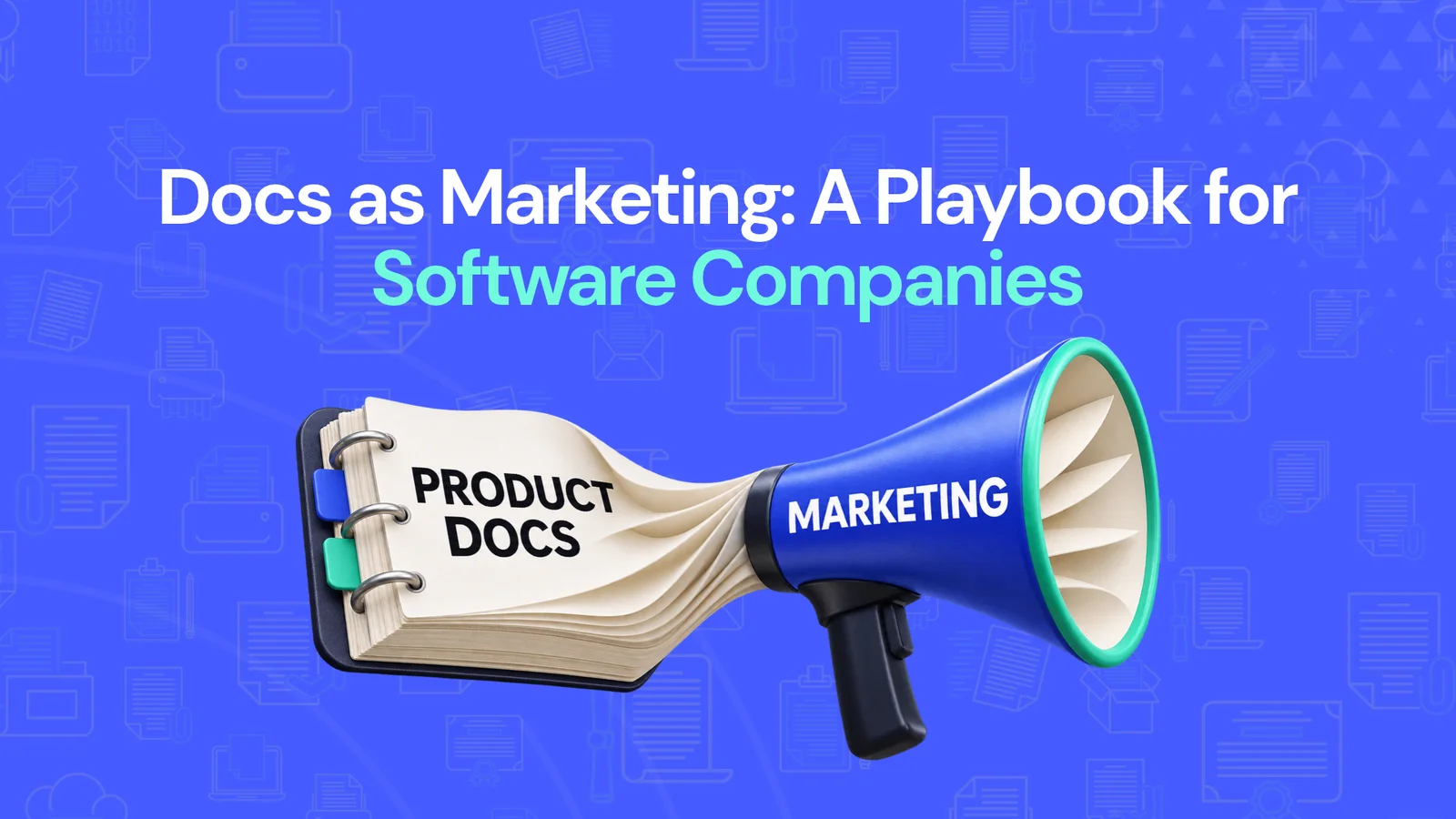
Docs as marketing uses documentation to answer buying questions without turning it into sales copy. Feature pages explain capabilities. Integration guides show compatibility. Use-case guides demonstrate workflows.
The wider documentation-as-a-growth-channel strategy explains why docs support acquisition. This playbook covers page selection, team ownership, distribution, and measurement.
For marketing SaaS, questions often concern attribution, automation, integrations, and setup limits.
Where should a marketing team find useful product knowledge?
Start with knowledge you already own, matched to buyers’ real questions.
Collect inputs from five places:
- Help center: Repeated how-to questions.
- Support tickets: Compatibility issues and recurring errors. Remove personal data.
- Sales calls: Questions before demos and trials.
- Product releases: Changes, prerequisites, and limitations.
- Search Console: Queries that existing pages answer poorly.
Track question, current URL, intent, source, owner, proposed page, and status in one sheet. Prioritize questions affecting product evaluation over volume alone.
If your source material is mostly support articles, review the help center SEO opportunities before creating separate pages.
Which documentation pages should marketing prioritize?
Prioritize feature, integration, and use-case pages because each answers a different question.
| Page type | Buyer question | Must include | Relevant next step |
|---|---|---|---|
| Feature | “Can this platform segment customers by purchase history?” | What it does, supported conditions, limits, example | Feature setup or product page |
| Integration | “Does this tool work with Shopify?” | Supported data, permissions, sync behavior, setup | Integration guide or trial |
| Use case | “How can I trigger a win-back campaign after a purchase?” | Goal, prerequisites, workflow, verification | Related feature or demo |
Examples are illustrative, not vendor claims.
Improve an existing page first when it already matches the intent. Avoid near-duplicate URLs.
How do you turn an existing help article into a discoverable answer?
Keep technical instructions, but add context for first-time visitors. “Enable order sync in Settings” does not explain why it matters.
For a fictional marketing app:
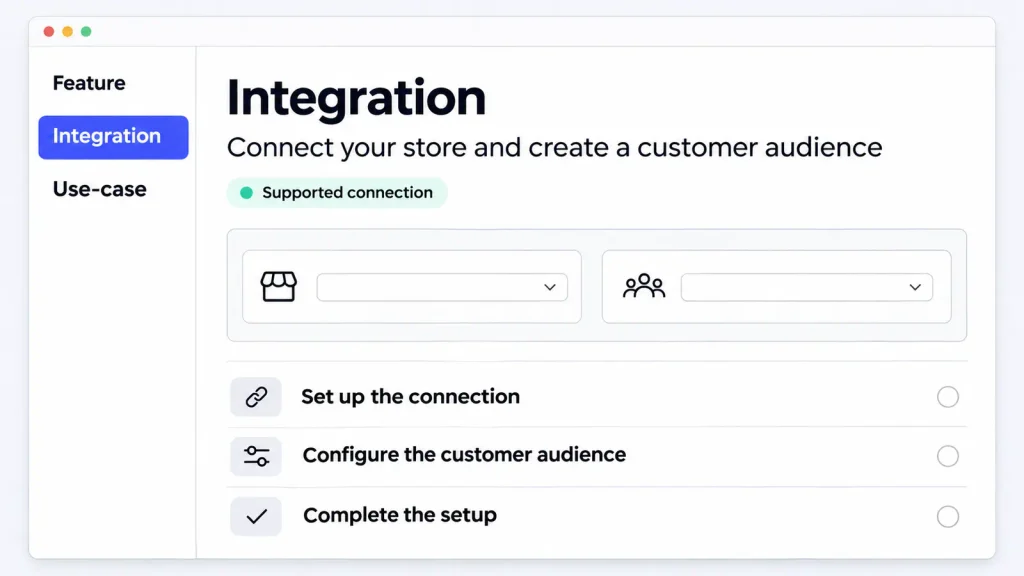
How do I connect Shopify orders to customer segments? Connect a supported Shopify store, choose eligible order events, then verify segment updates. Required permissions, supported events, and delays depend on the actual integration.
Then build the page in this order:
- Answer: State the capability or outcome immediately.
- Fit: Specify platforms, plans, permissions, and restrictions.
- Steps: Provide instructions, screenshots, or tested examples.
- Proof: Show how to verify the result.
- Connections: Link to features, troubleshooting, and relevant actions.
Apply documentation SEO basics: descriptive title, crawlable text, sensible URL, and contextual links. Preserve existing URLs when appropriate.
Who should own docs as marketing across product, support, and growth?
Marketing coordinates discovery; product experts approve technical claims. Keep ownership simple.
| Team | Responsibility |
|---|---|
| Marketing/SEO | Find search questions, brief pages, edit for clarity, distribute, measure |
| Product/engineering | Verify behavior, prerequisites, examples, and limitations |
| Support/customer success | Supply recurring questions and test whether instructions solve them |
| Documentation owner | Maintain URL structure, publishing standards, versioning, and review dates |
Assign one owner and one product reviewer per page. Include docs in release checklists.
How should marketing distribute useful documentation?
Share answers where people already ask the questions. Search is only one route.
- Link guides from directories, onboarding emails, and product pages.
- Turn workflows into LinkedIn explanations or release notes linking to the guide.
- Give sales and support one canonical URL to share.
- Share helpful answers on Reddit, Quora, or communities when relevant. Disclose affiliations and follow rules.
For AI discovery, prioritize public access, complete answers, and accuracy. Google’s 2026 guidance favors original content and SEO fundamentals over special AI markup. These practices support documentation for AI search, but cannot guarantee citations. developers.google.com
How do you measure whether docs as marketing is working?
Measure discovery, engagement, and product actions separately. Pageviews do not prove acquisition.
| Signal | What to examine |
|---|---|
| Search visibility | Search Console impressions, clicks, relevant queries, indexed URLs |
| Engagement | Organic docs entrances, related-guide visits, useful internal-link clicks |
| Commercial movement | Documented visits to pricing, trials, demos, and completed signups where measurable |
| AI visibility | Google Search Console’s Generative AI report, plus dated manual citation checks in other tools |
Baseline first; review after 30 and 60 days. Indexing may take longer. Separate observed signups from inferred attribution; consent and cross-domain journeys limit visibility.
What does a realistic 30-day docs-as-marketing sprint look like?
Start with three valuable pages, not a complete rebuild.
| Week | Deliverable |
|---|---|
| Week – 1 | Collect questions, audit URLs, baseline metrics, choose one feature, integration, and use case |
| Week – 2 | Interview product/support, draft improvements, validate all claims |
| Week – 3 | Publish or update pages, connect relevant links, test access and tracking |
| Week – 4 | Distribute helpful answers, inspect early signals, document fixes for the next sprint |
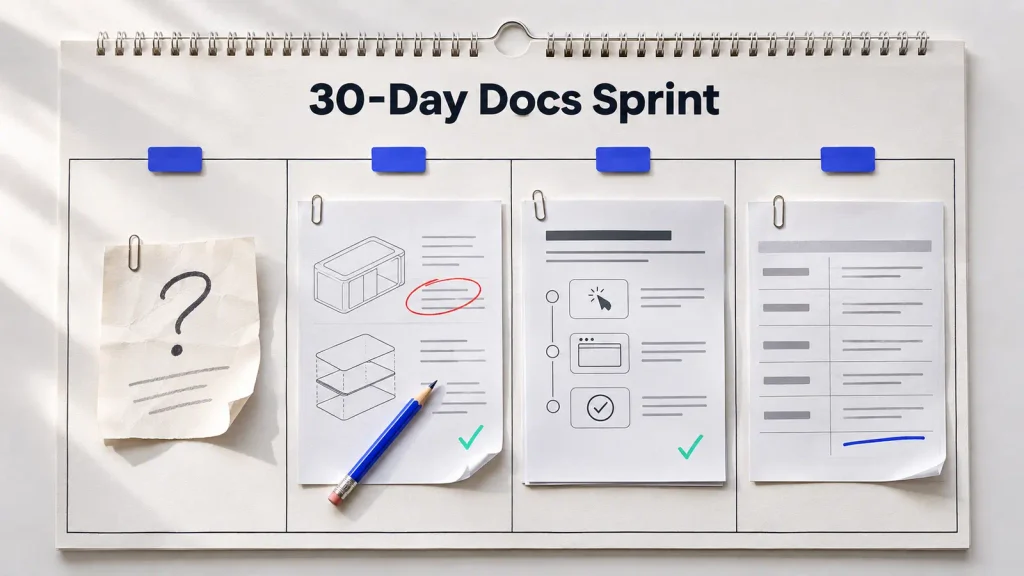
The goal: turn real questions into accurate, discoverable product answers.
What are the most common questions about docs as marketing? (FAQ)
Is docs as marketing the same as content marketing?
No. Content marketing often starts with industry topics. Docs as marketing starts with verified product capabilities and tasks. They work best together.
Should documentation pages include calls to action?
Yes, when relevant. Link to guides, integrations, trials, or demos without interrupting the answer.
Can an existing help center work as a marketing channel?
Yes, if pages are public, accurate, and understandable without an account. Keep sensitive content private.
Does FAQ schema improve Google rankings or AI citations?
No guaranteed benefit. Google retired FAQ rich results in May 2026, and AI search does not require special markup. developers.google.com
What is the best first step for a small SaaS marketing team?
Choose three buyer questions, improve their existing answers with product reviewers, and measure discovery and next steps.
Want to see what your existing docs are missing?
Try Decodability’s free Docs Discoverability Score for a starting view of public documentation signals.