PUBLIC DOCS TEARDOWN 01DOCUMENTATION ARCHITECTURE + UX
Social Snowball has the content.
The architecture is hiding the product.
Social Snowball already has deep documentation across programs, affiliates, tracking, payouts, integrations, customization, and fraud protection.
The problem is how that knowledge is structured.
Too much of the product sits behind one generic collection: Tutorials.
That makes important capabilities harder to scan, harder to connect, and harder to understand as one product system.
The content is not the problem.
The hierarchy is.
A merchant does not open documentation looking for a “tutorial.”
They are trying to answer something specific.
- How do payouts work?
- How are affiliate sales tracked?
- Does this connect with Klaviyo?
- How do subscription commissions work?
- How do we customize the affiliate experience?
The navigation should reflect those jobs directly.
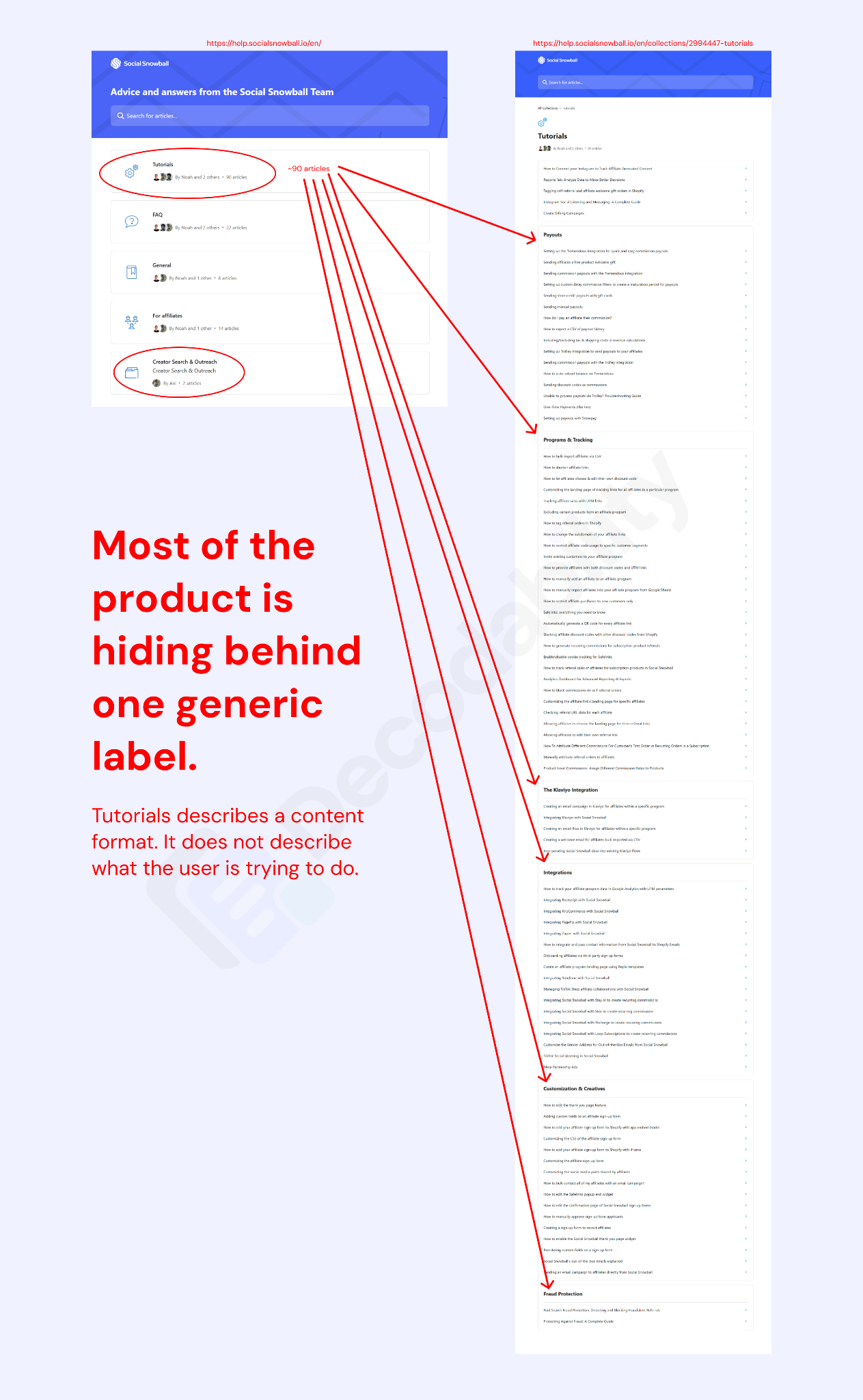
One collection is carrying too much of the product.
Inside Tutorials sit major product areas including:
- Payouts
- Programs & Tracking
- Klaviyo
- Integrations
- Customization & Creatives
- Fraud Protection
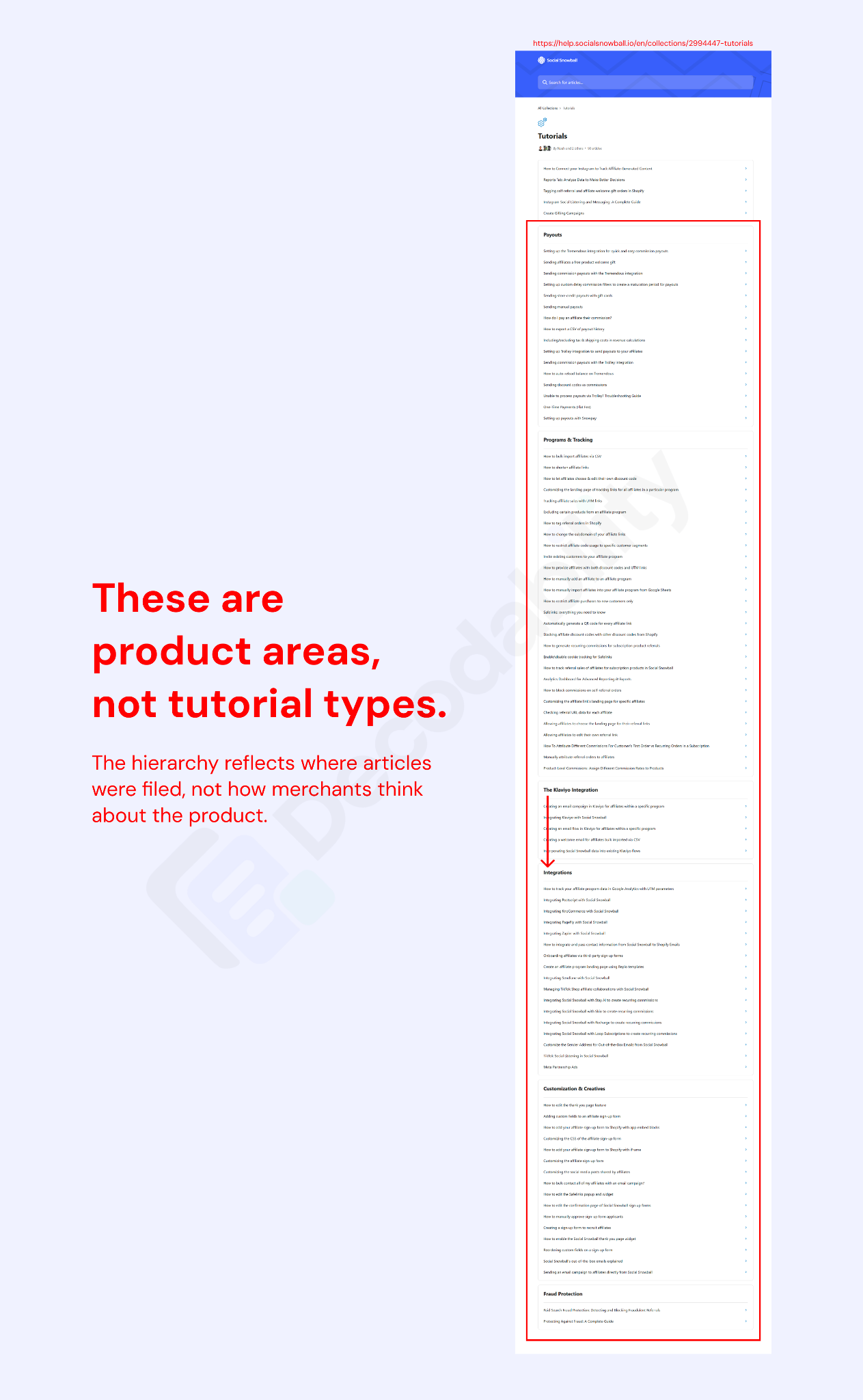
These are not supporting topics.
They are core product concepts.
When they all live under the same generic collection, the documentation stops acting like a product map.
Users have to learn the help-center structure before they can learn the product.
Turn the help center into a product map.
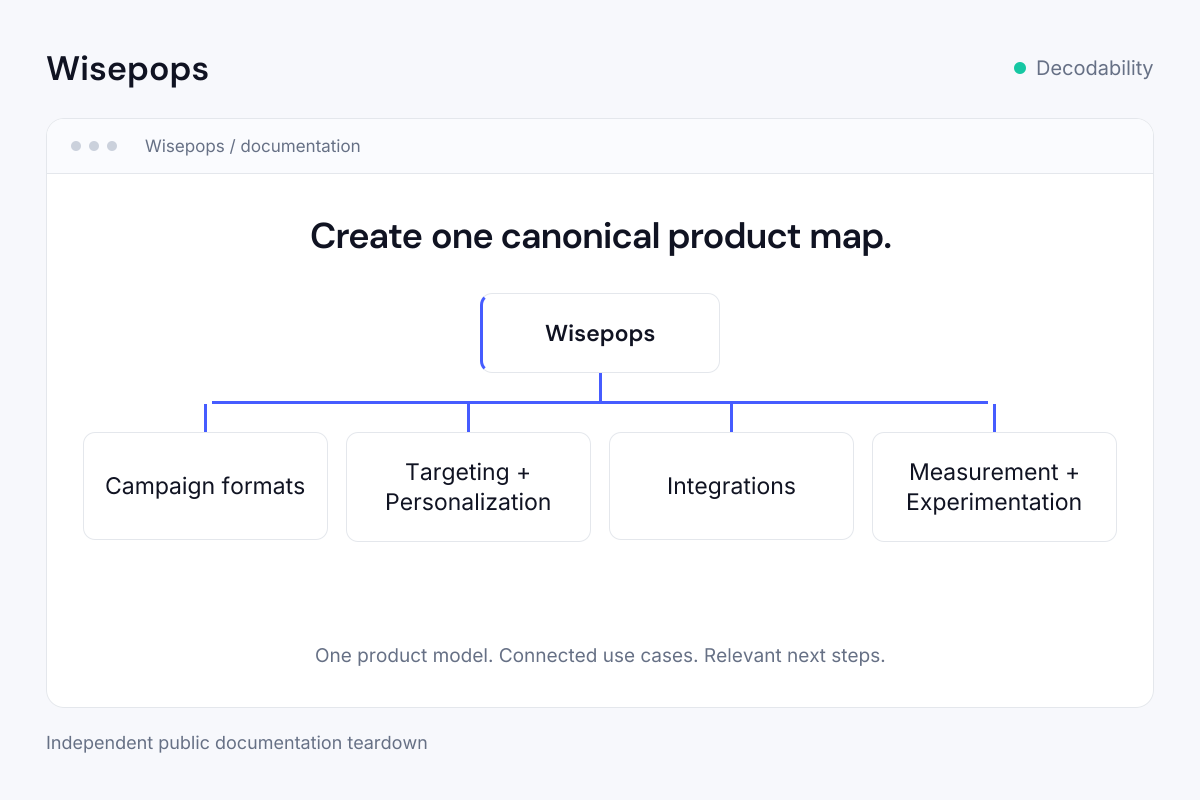
The stronger structure is built around what merchants are trying to do.
START HERE
- Getting started
- Launch checklist
- Core concepts
- Merchant dashboard
PROGRAMS + AFFILIATES
- Create and manage programs
- Recruit customers and creators
- Affiliate profiles
- Referral links
- Discount codes
- Program rules
CREATOR DISCOVERY + OUTREACH
- Creator Search
- Automated outreach
- Gifting
- Instagram tracking
- Creator workflows
TRACKING + ATTRIBUTION
- Safelinks
- UTM tracking
- Discount-code tracking
- Attribution windows
- Subscription referrals
- Manual attribution
- Reporting
PAYOUTS + COMMISSIONS
- Commission rules
- Payout methods
- Store credit
- Flat-fee payments
- Payout providers
- Affiliate payout setup
INTEGRATIONS
- Klaviyo
- Postscript
- Recharge
- Skio
- Stay AI
- Loop
- Replo
- PageFly
- Zapier
- Meta
- TikTok
- Google Analytics
CUSTOMIZATION
- Sign-up forms
- Affiliate emails
- Landing pages
- Thank-you experience
- Safelinks
- Brand styling
ANALYTICS + REPORTING
- Affiliate performance
- Referral data
- Exports
- UTM reporting
- Program performance
FRAUD + COMPLIANCE
- Self-referral protection
- Paid-search fraud
- FTC disclosure
- Program controls
The product becomes easier to understand before a single article is rewritten.
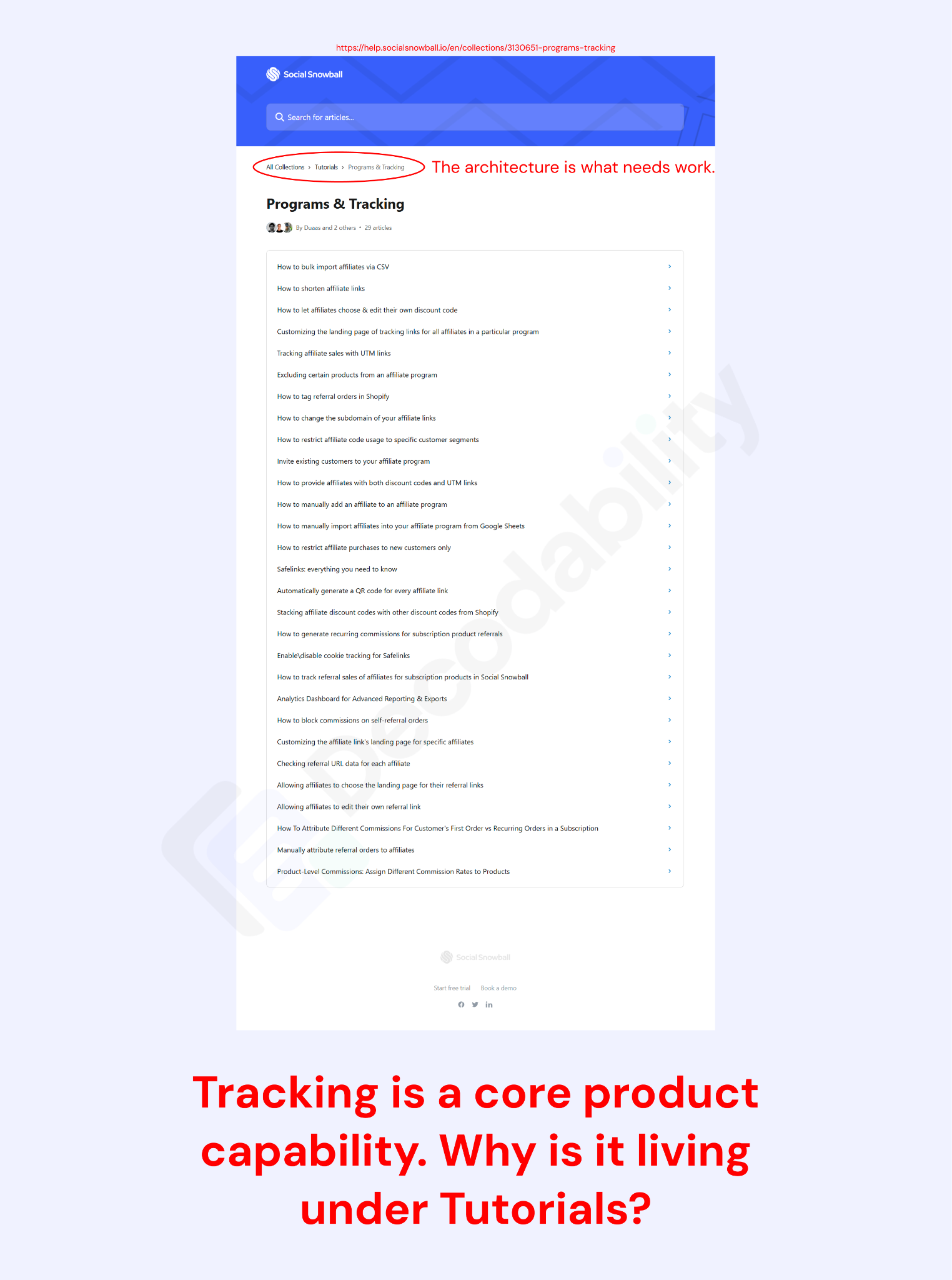
Tracking should look like a product capability.
Today, a merchant researching attribution can move through:
All Collections → Tutorials → Programs & Tracking
The content may answer the question.
The hierarchy weakens the context.
Tracking is one of the core systems behind affiliate software. It should be visible as a first-class capability, not buried under a content type.
Integrations need one clear home.
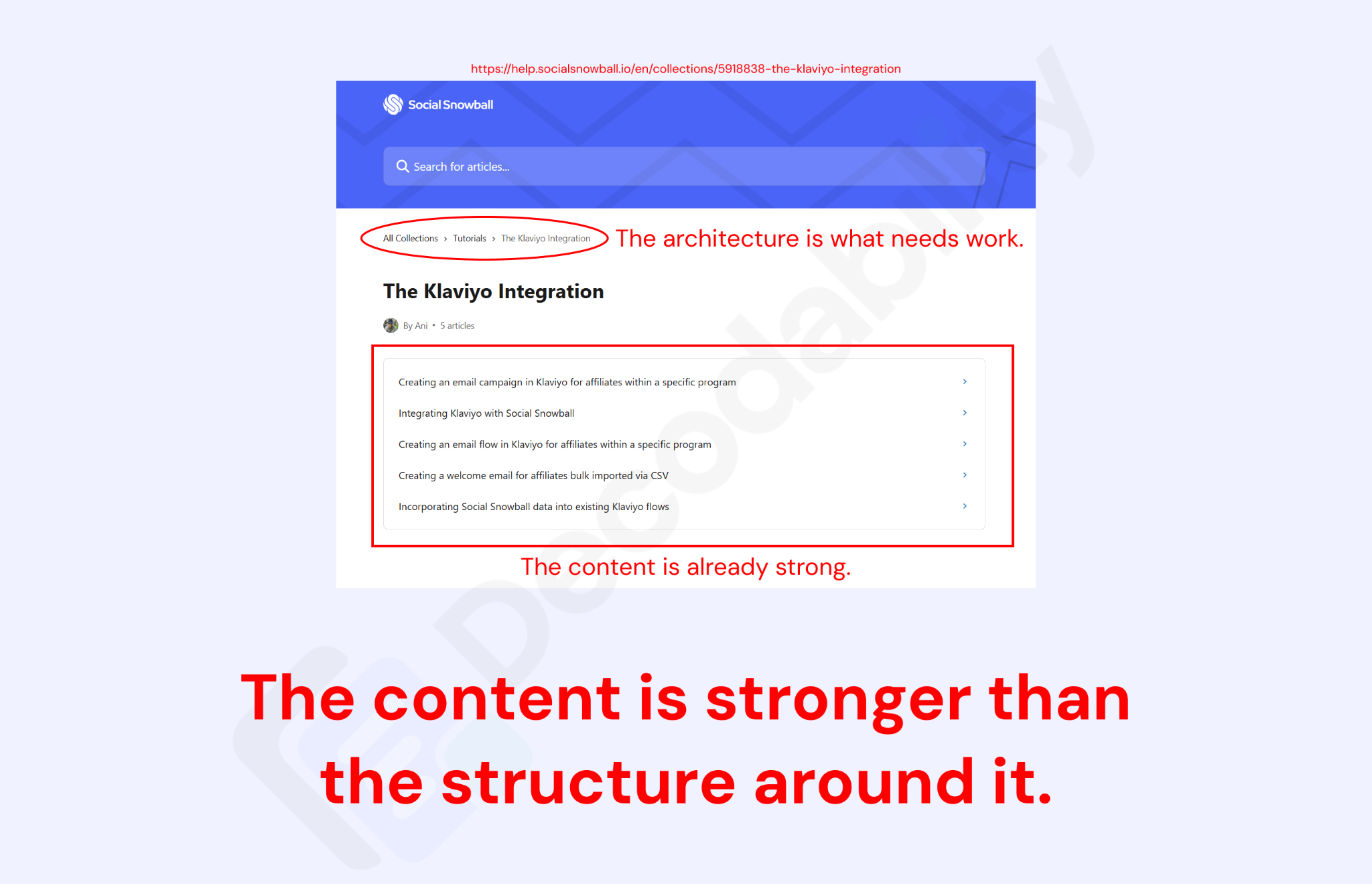
Social Snowball already has detailed Klaviyo documentation.
That is valuable product knowledge.
But Klaviyo sits in its own collection while other integrations sit inside a broader Integrations section.
A stronger model is simpler:
- Integrations
- → Klaviyo
- → Postscript
- → Recharge
- → Skio
- → Stay AI
- → Loop
- → Replo
- → PageFly
- → Zapier
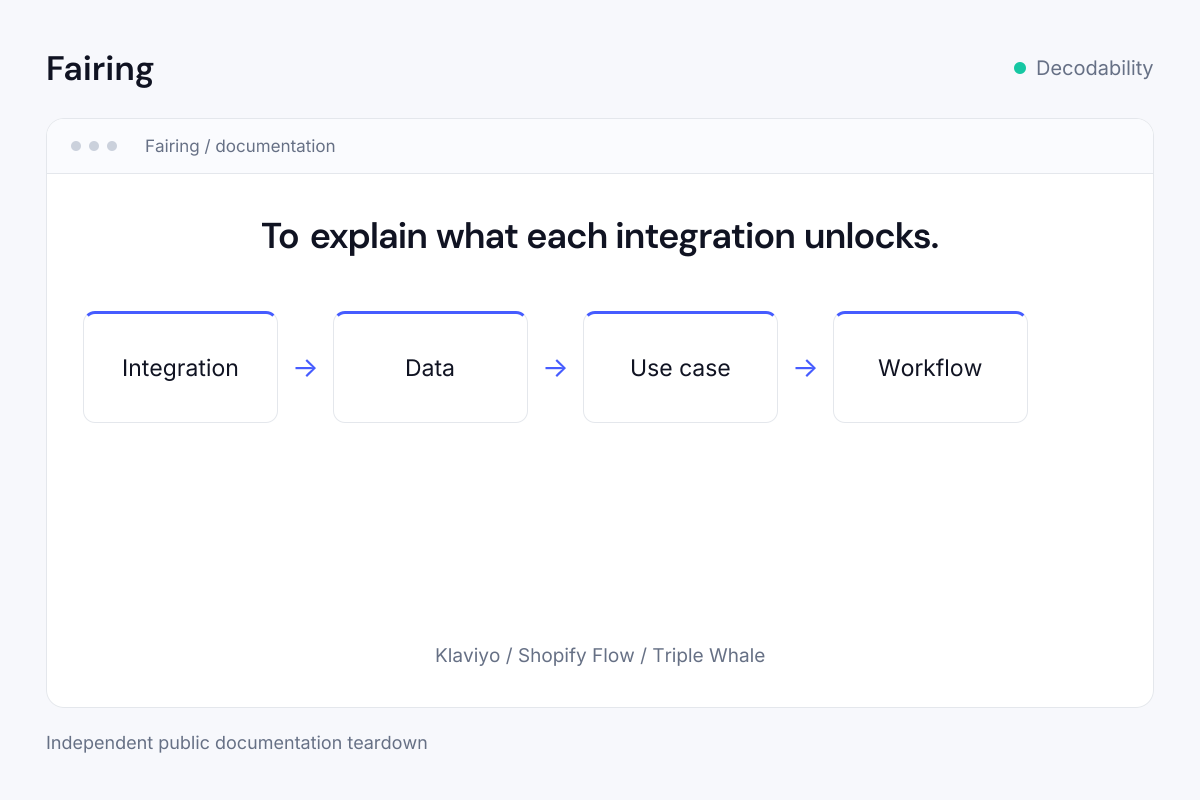
Every integration can then follow the same structure.
- What it connects
- What data moves
- What workflows it enables
- How to set it up
- Common use cases
- Limitations
- Troubleshooting
- Related product features
One system.
One place to understand it.
Collection pages should explain the job.
A collection page should do more than list articles.
Programs & Tracking can immediately explain the capability.
Build the rules behind your affiliate program and decide how every referral is tracked.
Configure affiliate links, discount codes, attribution windows, subscription commissions, product-level commissions, program eligibility, and reporting from one place.
Then organize the documentation by job.
- Program setup
- Referral tracking
- Attribution controls
- Subscription commissions
- Advanced commission rules
- Reporting
- Troubleshooting
The collection page becomes useful on its own.
It tells the user what this part of the product does before asking them to choose an article.
Connect related answers into one workflow.
A merchant trying to understand affiliate tracking should not have to discover every relevant article individually.
A dedicated “Track affiliate sales” hub can bring the system together.
- Which tracking method should we use?
- Can affiliates promote without a discount code?
- How are subscription renewals attributed?
- How long does attribution last?
- Can conversions be assigned manually?
- Where does referral data appear?
- How does tracking work with subscription tools?
One page can explain the system.
The individual setup articles can handle the implementation.
Use documentation to create the next step.
The help center already includes trial and demo pathways in places.
The stronger version is contextual.
On UTM tracking:
Track affiliate revenue without requiring a discount code.
On Klaviyo:
Connect Social Snowball to Klaviyo and use referral data inside lifecycle workflows.
On subscription commissions:
See how recurring orders are tracked across supported subscription platforms.
The goal is not to turn support content into generic marketing.
It is to connect the answer to the next relevant product action.
Internal links should follow the product journey.
- Programs
- Tracking
- Analytics
- Subscription commissions
- Recharge
- Skio
- Stay AI
- Loop
- Klaviyo
- Affiliate onboarding
- Segmentation
- Lifecycle workflows
- Creator Search
- Outreach
- Instagram tracking
- Gifting
- Payout setup
- Affiliate payout instructions
- Fraud protection
- Program rules
- Attribution controls
The documentation should behave like one connected system.
Start with structure.
Then rewrite.
The first move is not rewriting 90 articles.
It is fixing the architecture those articles live inside.
Rebuild the top-level navigation.
Promote the core product concepts into first-class hubs.
Make collection pages explain the job.
Connect related workflows through stronger internal linking.
Then identify the individual pages that need rewriting.
Better copy inside a weak structure is still hard to navigate.
The opportunity
Social Snowball already has the product knowledge.
The stronger documentation system makes that knowledge easier to decode.
- Programs.
- Creators.
- Tracking.
- Payouts.
- Integrations.
- Customization.
- Analytics.
- Fraud protection.
- Clearer for users.
- Clearer for Google.
- Clearer for AI systems.
- Better connected to the next product action.




Built for humans.
Decodable by machines.
Decodability rebuilds existing documentation for marketing and e-commerce software companies so product knowledge is easier to discover, understand, and act on.