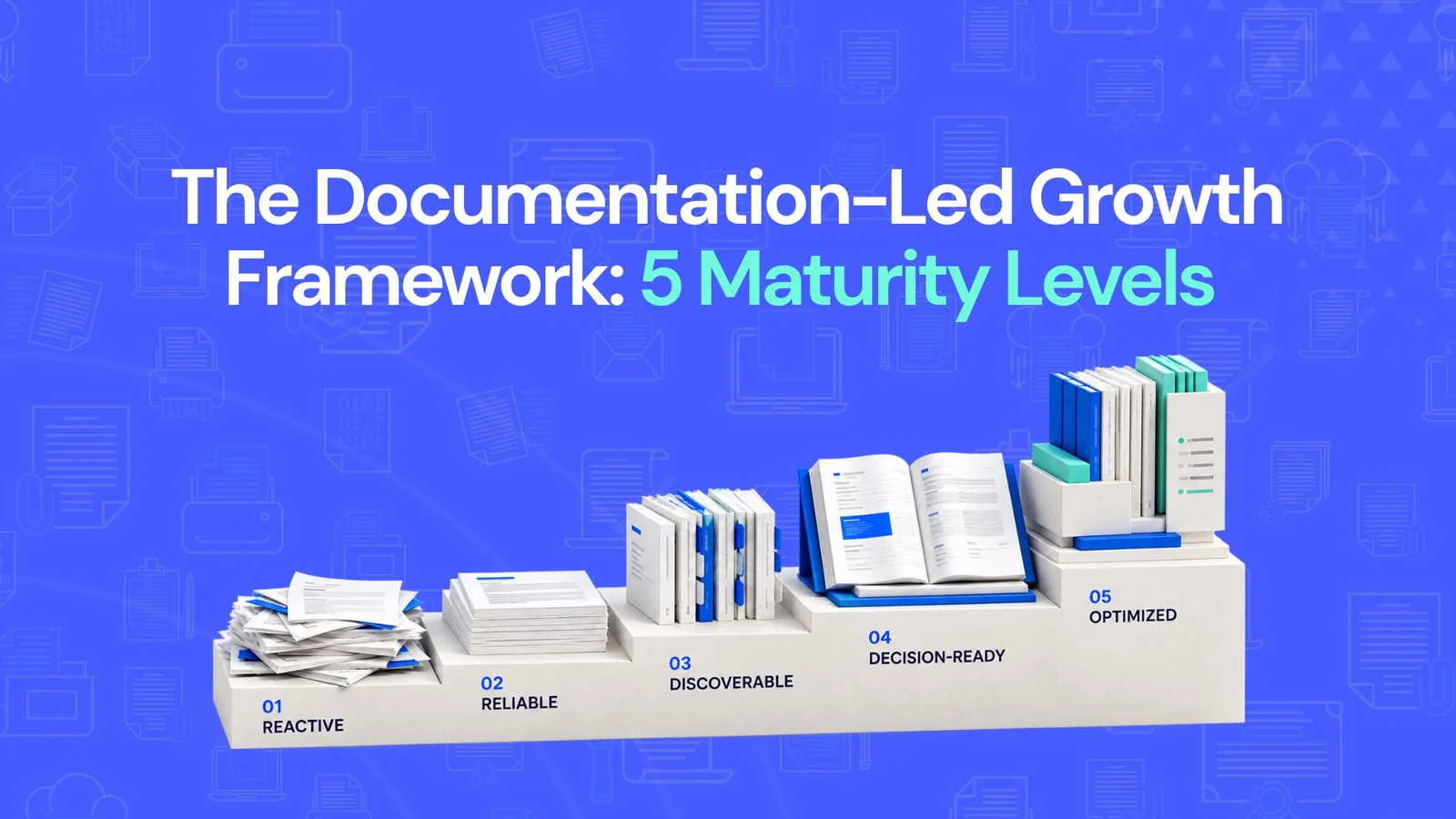



Most software companies have documentation. But having documentation and using it to grow your business are two different things.
Your help center might answer support questions perfectly. But can potential customers find it? Does it help them evaluate your product? Can you measure its contribution to growth?
Quick answer: The documentation-led growth framework is a proposed five-level maturity model from Decodability. It helps software companies assess whether their documentation is simply maintained or actively supports discovery, product evaluation, adoption, and measurable growth. The five levels are Reactive, Reliable, Discoverable, Decision-Ready, and Optimized.
This is a practical framework proposed by Decodability, not an established industry standard.
What Is a Documentation-Led Growth Framework?
A documentation-led growth framework is a way to evaluate and improve how software documentation contributes to business growth.
Traditional documentation focuses on helping existing users. Documentation-led growth expands that purpose to include potential customers researching software through Google, ChatGPT, Gemini, Claude, and other discovery channels.
The goal is not simply to publish more guides. It is to make existing product knowledge easier to find, understand, trust, and act on.
Google’s OpenDocs maturity checklist evaluates documentation content, processes, and governance. Decodability’s proposed framework takes a different approach by examining documentation through a growth lens.
What Are the Five Documentation-Led Growth Maturity Levels?
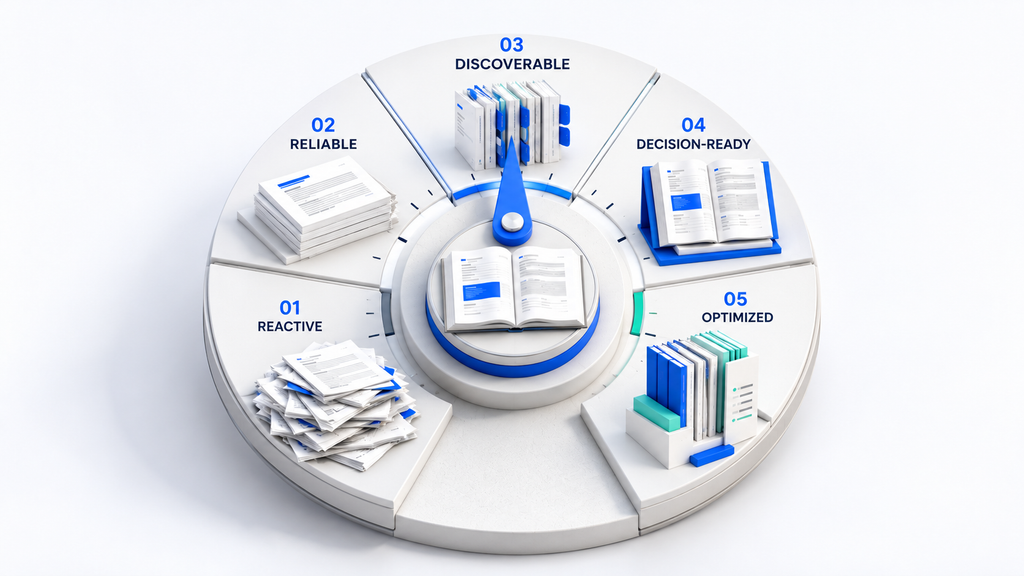
The five proposed documentation-led growth maturity levels describe how documentation can develop from a reactive support resource into a measurable growth channel.
| Level | Maturity stage | Primary outcome |
|---|---|---|
| 1 | Reactive | Answers basic support questions |
| 2 | Reliable | Maintains accurate, usable documentation |
| 3 | Discoverable | Makes product knowledge findable |
| 4 | Decision-Ready | Helps buyers evaluate and adopt |
| 5 | Optimized | Measures and improves growth contribution |
Each level builds on the capabilities of the previous one.
Level 1: What Does Reactive Documentation Look Like?
Reactive documentation exists mainly to resolve problems after users encounter them.
Criteria: Guides are incomplete or outdated, ownership is unclear, and updates happen primarily after support complaints.
Example behavior: A Shopify app changes its integration settings, but the help article still shows the previous interface.
Diagnostic question: Do we usually update documentation only when someone reports a problem?
Next step: Audit critical guides, correct inaccurate instructions, and assign a documentation owner.
The immediate goal is reliability, not traffic.
Level 2: When Does Documentation Become Reliable?
Reliable documentation consistently helps users complete tasks with accurate, understandable instructions.
Criteria: Important features have current guides, content owners are assigned, and product releases trigger documentation reviews.
Example behavior: A SaaS team updates integration instructions whenever the product changes and regularly checks onboarding articles.
Diagnostic question: Can a new customer successfully follow our guides without contacting support?
Next step: Organize articles by user tasks, standardize headings, improve internal navigation, and establish a review schedule.
Reliable documentation creates the foundation for discoverability.
Level 3: What Makes Documentation Discoverable?
Discoverable documentation can be found by people researching relevant problems, features, and integrations.
Criteria: Public pages are crawlable and indexable, important topics have descriptive titles, related guides are linked, and search visibility is monitored.
Example behavior: A marketing software company publishes a detailed guide answering how its platform integrates with Klaviyo. Buyers can find that guide without first visiting the company’s homepage.
Diagnostic question: Can someone unfamiliar with our brand find useful product answers through relevant searches?
Next step: Improve documentation SEO, resolve indexing problems, and answer specific buyer questions directly.
Google’s guidance for AI search also emphasizes valuable, original content rather than special optimization tricks.
These principles also support documentation for AI search, where clear product information and accessible answers help AI systems interpret software capabilities.
Discoverability creates opportunities for growth, but it does not guarantee rankings or AI citations.
Level 4: How Does Documentation Become Decision-Ready?
Decision-ready documentation helps potential customers determine whether software meets their requirements and what to do next.
Criteria: Guides cover use cases, compatibility, limitations, setup requirements, and clear next actions.
Example behavior: An integration guide explains whether historical Shopify orders sync with a marketing platform, identifies limitations, and links to a relevant trial or demonstration.
Diagnostic question: Can buyers answer their important compatibility and implementation questions without speaking to sales?
Next step: Address missing buyer questions, connect related guides, and introduce helpful contextual calls to action.
At this level, documentation supports both acquisition and product activation.
Level 5: What Does Optimized Documentation-Led Growth Look Like?
Optimized documentation is continuously improved using evidence from search, user behavior, and business outcomes.
Criteria: Teams track documentation visibility, engagement, trial journeys, adoption signals, and content performance. Improvements are tested and reviewed regularly.
Example behavior: A SaaS company identifies an integration guide frequently visited before trial registrations, improves its content, and evaluates whether subsequent performance changes.
Diagnostic question: Can we show how documentation contributes to discovery, evaluation, or adoption using reliable evidence?
Next step: Connect documentation analytics with product and conversion data, establish baselines, and run controlled improvements.
The goal is not more pageviews. It is better outcomes.
How Can You Assess Your Documentation Maturity Level?
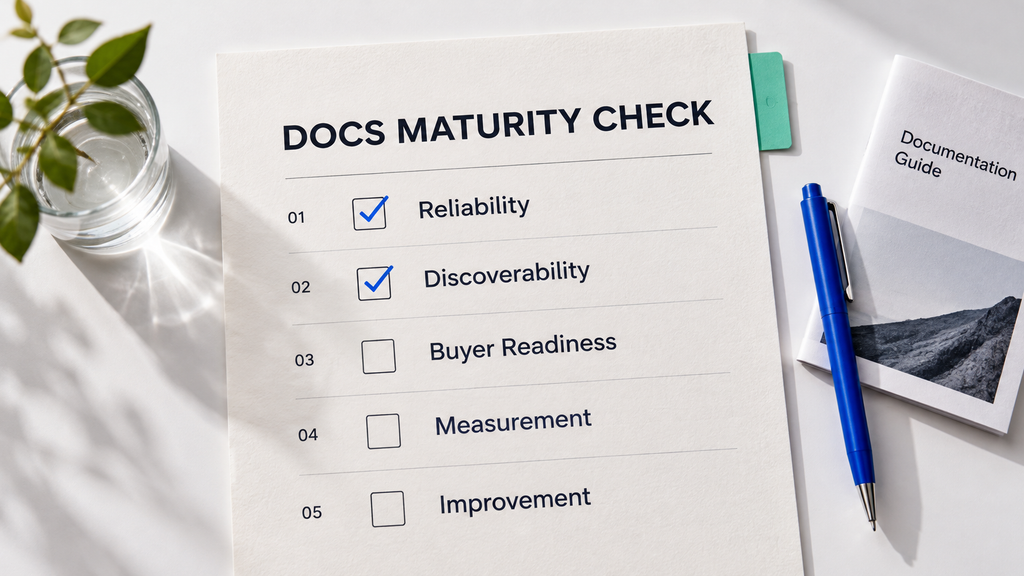
Start with five practical checks:
| Check | Evidence to look for |
|---|---|
| Reliability | Assigned owners and current guides |
| Discoverability | Indexed pages and relevant search impressions |
| Buyer readiness | Compatibility answers and clear next actions |
| Measurement | Document-to-conversion journey tracking |
| Improvement | Regular reviews and documented experiments |
Scoring rule: Start at Level 1. Move to Level 2 when reliability is established, Level 3 when discoverability is demonstrated, Level 4 when buyer readiness is established, and Level 5 when measurement and improvement are operational.
Do not skip foundational levels. A highly visible but inaccurate help center is not mature documentation.
This is a proposed diagnostic method, not a scientifically validated score.
How Do You Measure Documentation-Led Growth?
Documentation-led growth should be evaluated using signals connected to business outcomes.
Useful metrics include:
- Search visibility: Relevant impressions and organic clicks in Google Search Console.
- Buyer engagement: Visits to feature, integration, and comparison guides.
- Conversion journeys: Trials, demo requests, or sign-ups following documentation visits.
- Product activation: Successful setup and feature adoption.
- AI visibility: Observed mentions or citations across a consistent set of relevant AI queries.
Use Google Analytics 4, Search Console, and product analytics together.
Importantly, a customer reading documentation before converting does not prove the documentation caused that conversion. Stronger conclusions require comparison, testing, and careful attribution.
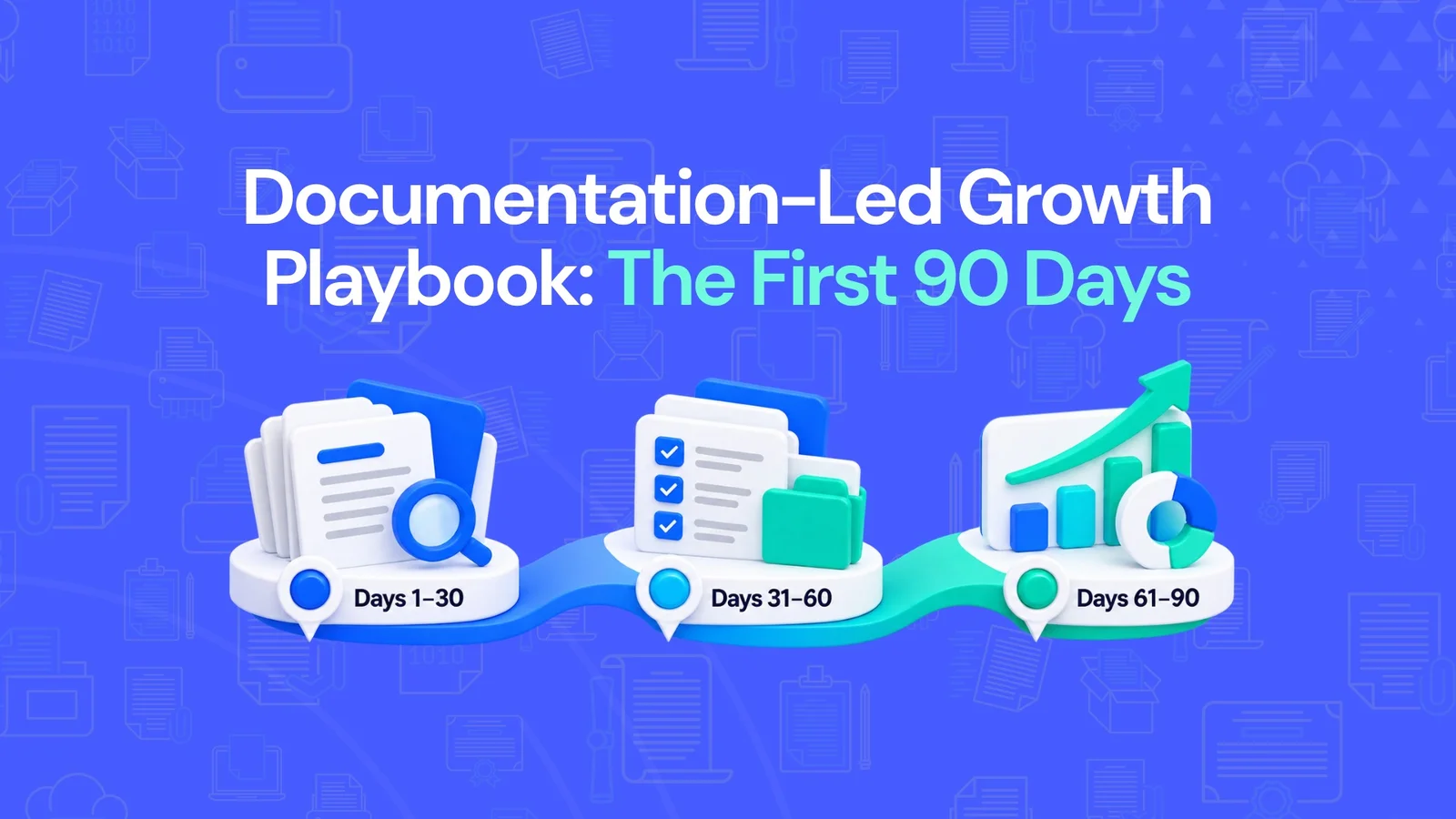
How Can You Improve Documentation Maturity in 30 Days?
You do not need to rebuild your entire help center immediately.
A focused starting plan could look like this:
Week 1: Audit. Identify your current maturity level, outdated pages, and unanswered buyer questions.
Week 2: Improve. Update your most important onboarding, feature, and integration guides.
Week 3: Connect. Fix discoverability problems, strengthen internal links, and add relevant next steps.
Week 4: Measure. Establish baselines for search visibility, engagement, and relevant conversions.
Then prioritize the next improvements using actual evidence.
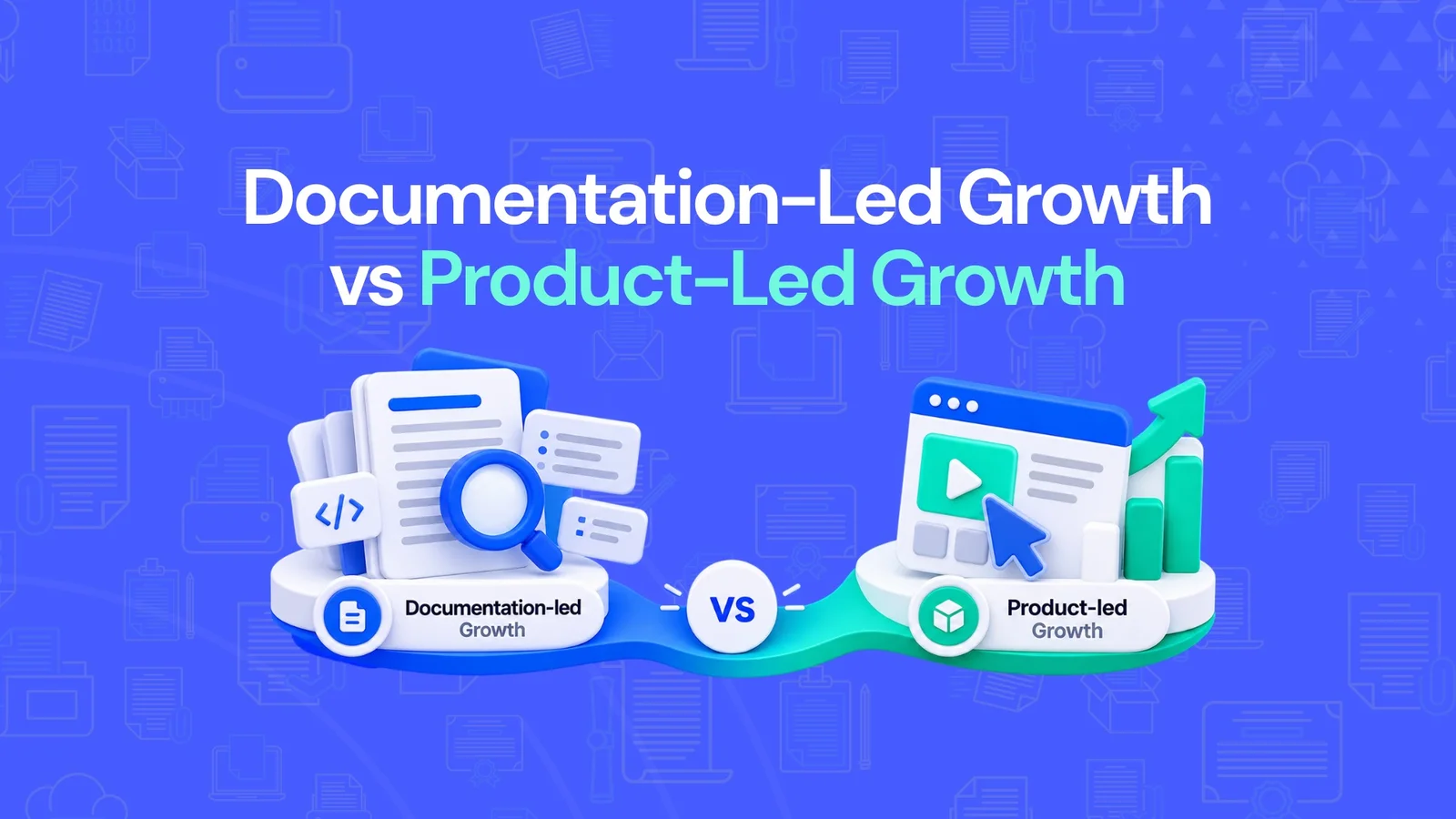
How Is Documentation-Led Growth Different From Product-Led Growth?
Product-led growth primarily uses the product experience to drive acquisition, activation, and expansion. Documentation-led growth uses product knowledge to support those same journeys, including before someone becomes a user.
The two approaches complement each other.
For a deeper comparison, read Documentation-Led Growth vs. Product-Led Growth: Key Differences.
Frequently Asked Questions
Is the five-level documentation-led growth framework an industry standard?
No. This five-level framework is proposed by Decodability as a practical way for software teams to evaluate documentation maturity and identify improvements.
Can small SaaS companies reach Level 5?
Yes. Maturity depends on consistent practices, not company size. A small team can maintain accurate documentation, monitor search visibility, and measure meaningful outcomes with a focused process.
Does better documentation guarantee AI citations?
No. Clear, accessible, accurate documentation can make product information easier to discover and interpret, but individual AI platforms decide which sources they retrieve, reference, or cite.
Which documentation pages should we improve first?
Start with high-value onboarding, integration, feature, and troubleshooting guides. Prioritize pages connected to frequent customer questions, product evaluation, or important conversion journeys.
Ready to Turn Your Documentation Into a Growth Channel?
Your documentation does not need to reach Level 5 overnight. It needs a clear starting point and a practical path forward.
At Decodability, we help marketing and e-commerce software companies rebuild existing documentation for better search discovery, AI visibility, and buyer understanding through a focused 60-day program.
Find out how discoverable your documentation is. Start with our free Docs Discoverability Score to identify opportunities to improve crawlability, structure, internal linking, and AI readability.