


Growing a software company is not just about attracting more visitors. It is about helping the right people understand your product, trust it, and start using it.
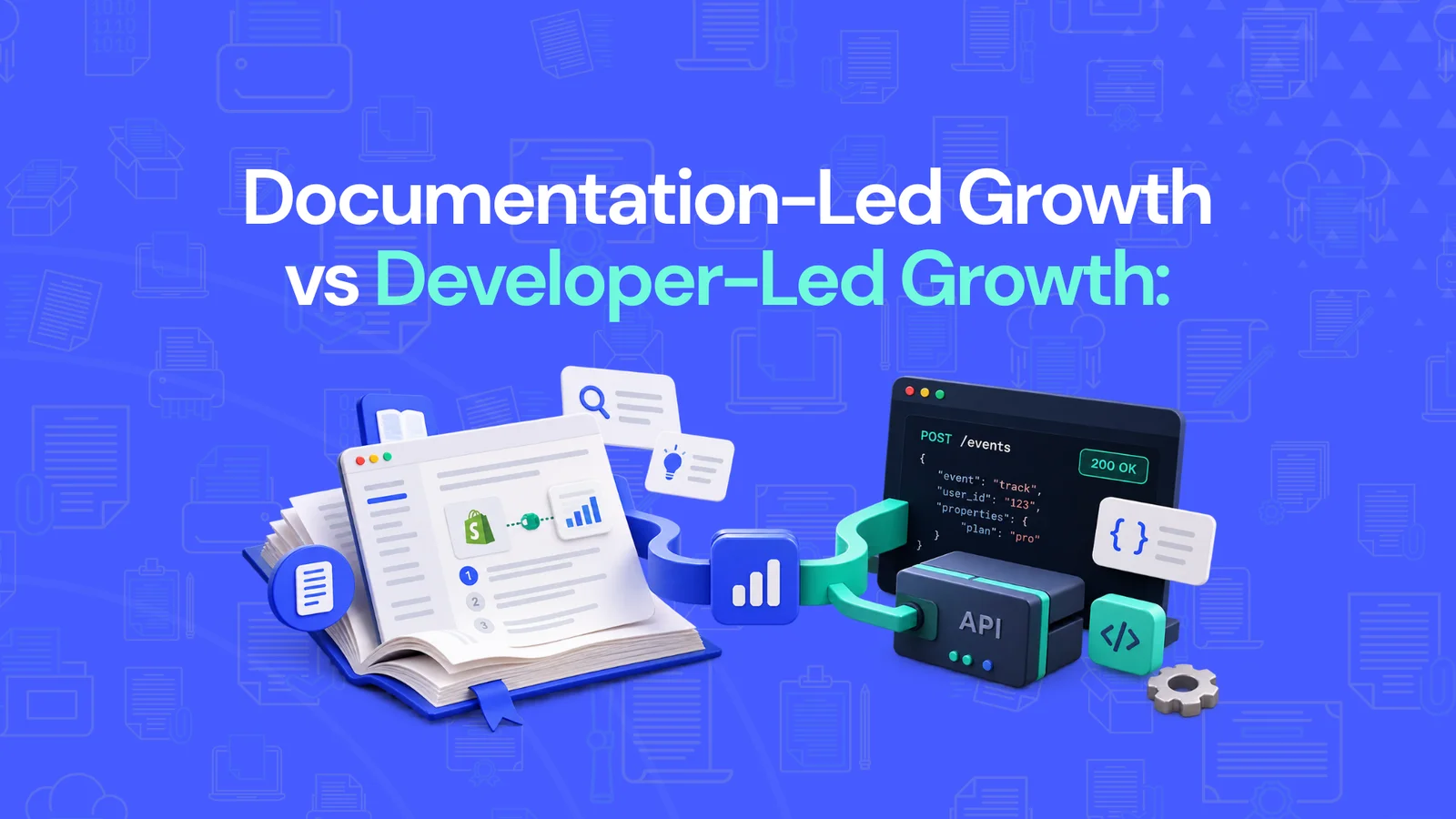
Two approaches can help: documentation-led growth and developer-led growth. Both reduce friction, but they reach different audiences and create different paths to adoption.
Quick answer: The main difference between documentation-led growth vs developer-led growth is what drives adoption. Documentation-led growth uses helpful product documentation to attract, educate, and convert potential customers. Developer-led growth empowers developers to test, build with, and recommend a product.
Both strategies can work together, but they require different content, distribution channels, conversion journeys, and success metrics.
What Is Documentation-Led Growth?
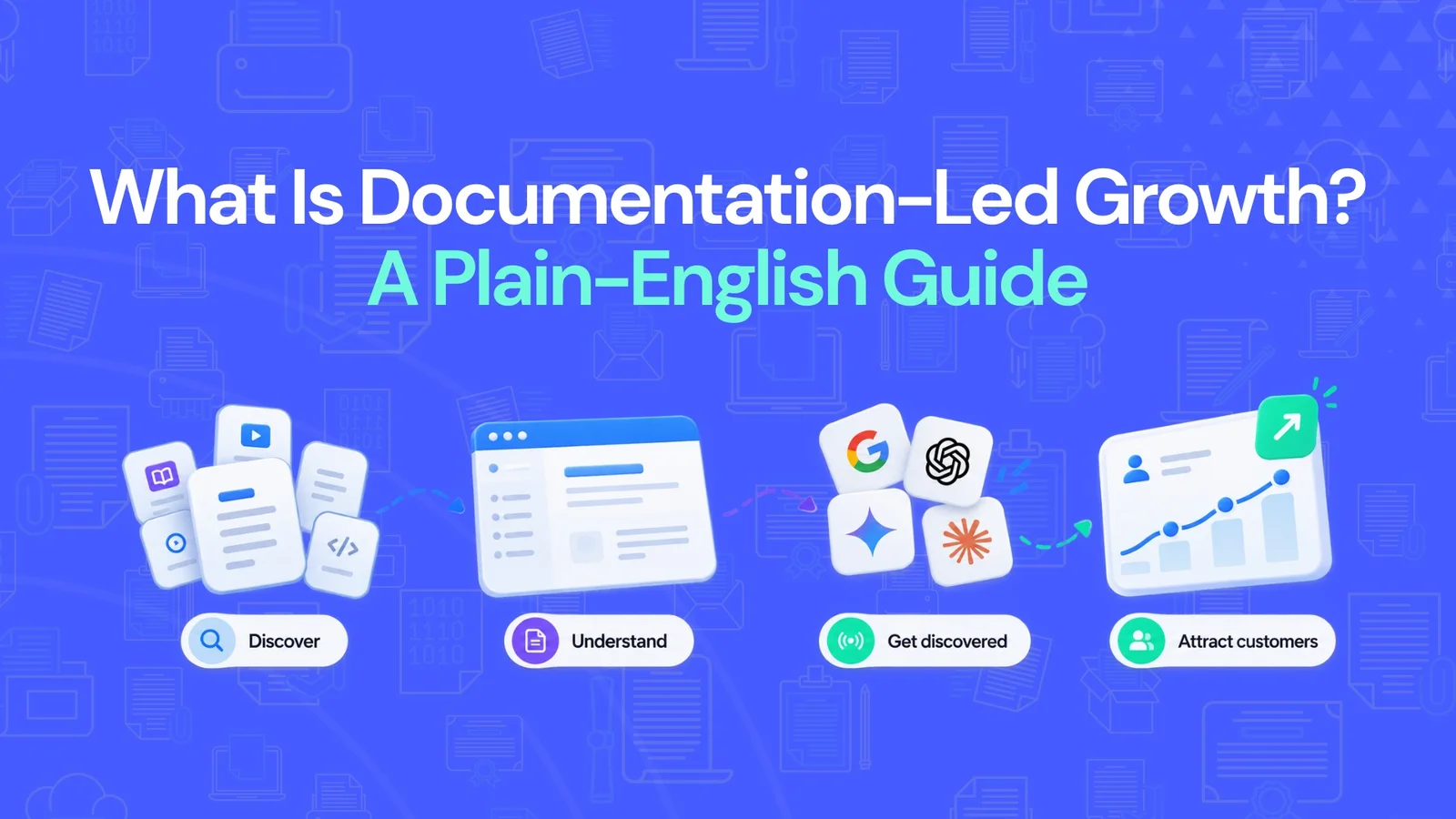
Documentation-led growth is a strategy that uses product documentation as a channel for discovery, customer acquisition, activation, and retention.
Traditional documentation focuses on helping existing customers use a product. Documentation-led growth takes that further.
It makes product guides useful to people who have not purchased the software yet.
For example, imagine a Shopify merchant searching:
“How do I connect an email marketing platform to Shopify?”
A clear integration guide from an email marketing provider could answer that question, demonstrate compatibility, and encourage the merchant to try the product.
The documentation has now helped with both support and acquisition.
This approach is especially relevant to marketing platforms, e-commerce applications, automation tools, and business software.
What Is Developer-Led Growth?
Developer-led growth is a go-to-market strategy where developers discover, test, adopt, and recommend software through hands-on technical experiences.
Instead of asking developers to book a sales demonstration, companies help them build something useful first.
A developer evaluating a payment API might:
- Find an API quickstart.
- Create a test account.
- Run a sample integration.
- Complete a successful test payment.
- Recommend the API for production use.
This approach is common among API platforms, developer tools, cloud infrastructure products, and SDK-based services.
As WorkOS explains in its developer-led growth guide, developers often want to build before committing to a purchase.
The important distinction is that developer-led growth is driven by developer adoption, not documentation alone.
What Are the Main Differences Between Documentation-Led Growth and Developer-Led Growth?
The biggest differences are the audience, source material, distribution, conversion journey, and metrics.
| Comparison | Documentation-Led Growth | Developer-Led Growth |
|---|---|---|
| Primary audience | Buyers, marketers, merchants, product users | Developers, engineers, technical evaluators |
| Source material | Help articles, feature guides, integrations, use cases | APIs, SDKs, code samples, quickstarts |
| Distribution | Google Search, AI search, help centers, integration directories | GitHub, technical search, developer communities, tutorials |
| Conversion journey | Question → Answer → Product evaluation → Signup | Technical problem → Experiment → Working integration → Adoption |
| Key metrics | Qualified organic traffic, documentation-assisted signups, feature adoption | First successful API calls, active integrations, production usage |
| Primary goal | Make software easier to discover and evaluate | Make software easier to build with and adopt |
These are typical patterns, not strict boundaries. Developer-led companies also need documentation, while documentation-led companies may serve technical audiences.
Who Is Each Strategy Designed to Reach?
Documentation-led growth typically serves a broader audience, while developer-led growth primarily serves technical users and decision influencers.
A marketing manager evaluating customer segmentation software wants to know whether it supports Shopify, what data it uses, and how to configure an audience.
For platforms like these, documentation SEO for marketing software helps make integration, feature, and workflow information easier for prospective buyers to discover.
A developer evaluating a customer data API needs authentication details, request examples, data formats, and error handling instructions.
Both need trustworthy answers, but their expectations differ.
The practical rule: Write for the person making progress toward the next buying or adoption decision, not simply the person already using your software.
What Source Material Drives Each Growth Strategy?
Documentation-led growth begins with product knowledge, while developer-led growth depends on a strong technical product experience.
Documentation-led content often includes:
- Feature and use-case guides
- Integration and compatibility documentation
- Setup and migration instructions
- Troubleshooting and limitations
- Product comparison information
Developer-led resources include API references, SDKs, sample repositories, technical quickstarts, and working sandbox environments.
The difference is not whether code exists. It is what the reader needs to accomplish.
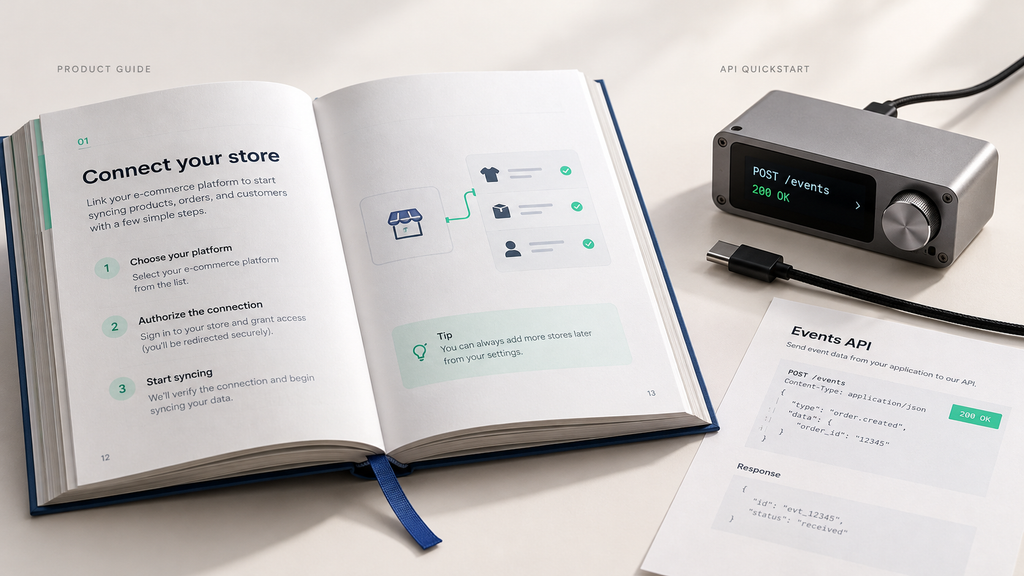
A merchant may want to connect Shopify to an email platform without writing code. A developer may need an API reference to create a custom integration.
Both experiences should be documented, but not necessarily on the same page.
Where Does Each Strategy Reach Potential Customers?
Documentation-led growth relies heavily on discoverable answers, while developer-led growth combines technical discovery with community participation.
Documentation-led distribution can include public help centers, organic search results, integration marketplaces, partner content, and AI-assisted research.
Developer-led distribution often includes GitHub, technical tutorials, developer forums, open-source projects, and recommendations between engineers.
There is considerable overlap.
Google, ChatGPT, Claude, and Gemini can help users research both technical and non-technical products. However, appearing in AI-generated answers is not guaranteed.
Google’s official AI search guidance emphasizes useful content and established SEO practices rather than separate ranking tricks.
For both strategies, documentation for AI search benefits from accurate, accessible, and well-organized product information that AI systems can more easily interpret.
How Do the Conversion Journeys Differ?
Documentation-led growth converts through understanding and confidence. Developer-led growth converts through successful implementation and technical confidence.
Consider these two journeys.
Documentation-led journey
A merchant searches for a way to connect an email platform to Shopify.
Search → Integration guide → Compatibility confirmed → Product signup → First campaign
The content removes uncertainty before the merchant commits.
Developer-led journey
A developer needs to add payments to an application.
Technical search → API documentation → Test integration → Successful payment → Production deployment
Here, the working integration becomes evidence that the product fits.
In either journey, the person who starts the evaluation may not control the final budget. Documentation should help them explain the product’s value to other decision-makers.
Which Metrics Should You Track?
Documentation-led growth should measure how documentation contributes to discovery and customer outcomes. Developer-led growth should measure technical activation and sustained adoption.
| Documentation-led metrics | Developer-led metrics |
|---|---|
| Non-branded organic clicks to documentation | Qualified technical documentation visits |
| Documentation-to-signup conversion rate | First successful API-call rate |
| Demo requests influenced by documentation | Time to first successful integration |
| Feature activation after reading guides | Sandbox-to-production conversion |
| Relevant AI answer citations | Active production integrations |
An important distinction is that traffic alone does not prove growth.
For example:
Documentation-to-signup rate = Signups attributed to documentation ÷ Eligible documentation visitors × 100
Developer activation rate = Developers completing a defined technical milestone ÷ Developers who started the onboarding process × 100
Define the attribution window and eligibility rules before comparing results.
Also, a relationship between documentation views and higher activation does not automatically prove that the documentation caused the improvement.
What Do These Strategies Look Like in Real Software Products?
How does Stripe illustrate developer-led growth?
Stripe’s Checkout quickstarts help developers choose an integration approach and build a payment experience.
The documentation supports practical technical work, not just product awareness.
A useful activation milestone for this kind of journey is completing a successful test payment.
This illustrates developer-led growth because a developer can validate technical value before recommending wider adoption. It does not, by itself, establish how much of Stripe’s revenue comes from this motion.
How does Klaviyo illustrate documentation-led growth?
Klaviyo’s Shopify integration guide explains how merchants can connect their store, synchronize data, and enable tracking.
That information is useful to existing customers and merchants evaluating whether the integration fits their needs.
A potential customer can answer important questions before signing up:
- Does the platform support Shopify?
- What customer information can it sync?
- What does setup involve?
This is the opportunity documentation-led growth creates: turning practical product answers into useful pre-purchase experiences.
These are examples of the mechanisms, not verified claims about either company’s acquisition performance.
Can Documentation-Led Growth and Developer-Led Growth Work Together?
Yes. Both strategies can support the same software company, particularly when it serves technical and non-technical customers.
Consider an e-commerce analytics platform.
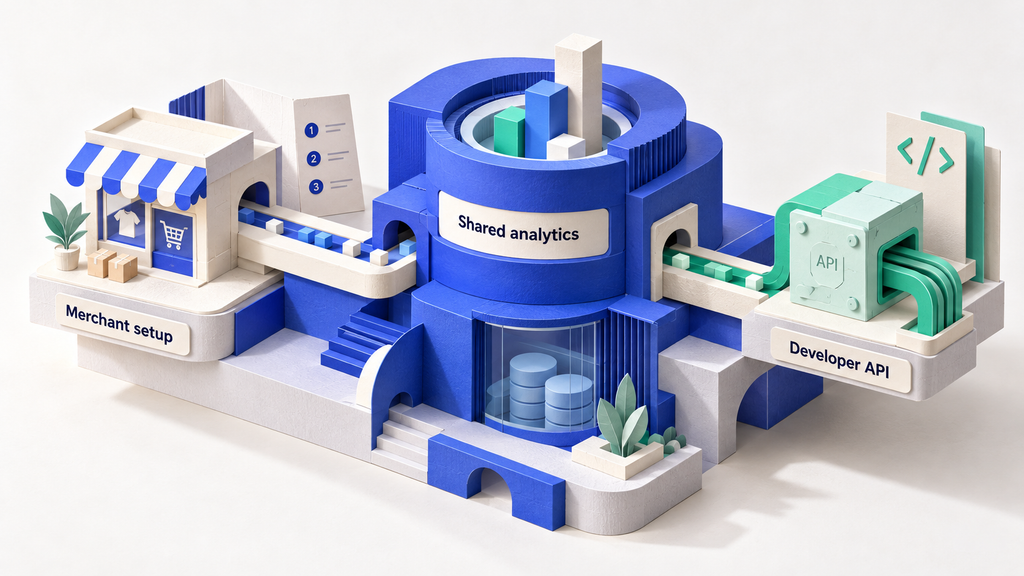
A marketing manager wants to connect Shopify and view customer retention reports. A developer wants to use the platform’s API to export event data into another system.
The first person needs plain-English integration and reporting guides. The second needs API documentation and working code.
A strong documentation system can serve both journeys through separate entry points and clear links between them.
The goal is not to choose one audience at the expense of the other. It is to remove the specific friction each audience encounters.
How Can You Choose the Right Growth Strategy?
Start with the person who first discovers and evaluates your product. Then identify what they must achieve before adopting it.
Use this simple decision framework:
- Identify your primary user. Are they a merchant, marketer, founder, or developer?
- Identify the first success milestone. Is it a working campaign, completed integration, or successful API call?
- Audit the supporting content. Can someone reach that milestone using the information available publicly?
- Measure the journey. Track qualified discovery, completion of key steps, and meaningful adoption.
For marketing and e-commerce software, documentation-led growth can be a practical starting point when useful product knowledge already exists but is difficult for prospective customers to find.
For API-first products, developer-led growth often requires investment in both technical documentation and the hands-on product experience.
If documentation-led growth is your next priority, our 90-day documentation-led growth playbook explains how to audit, prioritize, improve, and measure your documentation.
Frequently Asked Questions
Is documentation-led growth the same as developer-led growth?
No. Documentation-led growth uses product documentation to support discovery, evaluation, and adoption. Developer-led growth uses developer experimentation, technical success, and advocacy to encourage software adoption. They can overlap.
Does developer-led growth require API documentation?
Not always, but clear technical documentation is particularly important for API-first products. Developers typically need setup instructions, examples, authentication guidance, and troubleshooting information to make progress independently.
Can documentation-led growth work for non-technical SaaS products?
Yes. Marketing software, e-commerce applications, and business tools can use feature guides, integration tutorials, and use-case documentation to answer buyer questions before signup.
Which strategy is better for SEO and AI search?
Neither automatically ranks better. Documentation-led growth creates opportunities to answer practical product questions, while developer-led growth creates valuable technical resources. Search visibility depends on relevance, accuracy, accessibility, and other factors.
Can a SaaS company use both growth strategies?
Yes. Companies serving both technical and non-technical audiences can provide separate documentation journeys while connecting them through shared product knowledge and navigation.
What Should Software Companies Take Away?
Documentation-led growth and developer-led growth are not competing philosophies.
One focuses on making product knowledge useful for discovery and evaluation. The other focuses on helping developers achieve real technical outcomes.
For marketing and e-commerce software companies, an important opportunity is often hiding in the documentation they have already written.
Your product documentation should not only explain how the software works. It should help the next customer discover why it is right for them.
Turn Your Documentation Into a Discovery Channel
At Decodability, we help marketing and e-commerce software companies transform existing documentation into a more discoverable, useful acquisition asset.
Our 60-day documentation program covers research, structure, rebuilding, and launch, with a focus on search visibility, AI discoverability, and clearer buyer journeys.
Explore how Decodability’s 60-day documentation transformation works to see how we research, restructure, rebuild, and launch documentation designed for better discovery and product understanding.